
Chapter 1 of 16
My story
How I Became a Marketer Who Thinks Like an Owner.
The story behind ZL Social, in my own words: what I noticed, why I acted and what each chapter taught me.
I have been the founder of ZL Social since 2019, with a background in entrepreneurship, sales, advertising and creative production. I personally deliver dedicated marketing management for a maximum of five clients.
I think like a business owner because I have been one since I was a child. I did paid creative work as a teenager, developed a supplement brand, and created and ran my own e-commerce store. I won a Mitsubishi Canada sales presentation award, set a dealership record by completing manufacturer certification in two days, and became the highest-paid employee in my digital role across the dealership group. Those experiences shaped the results I deliver at ZL Social.
01
Ages 6–8 · 2003–2005
Rabat: My First Lessons in Demand
My first business started in a school yard. At Khalil Gibran School in Rabat, Morocco, my classmates were collecting Pogs, and I noticed how much they wanted them. I was six years old. I sourced Pogs and sold them to my classmates at a profit. They bought from me out of convenience, because I was right there at school, not because they did not know where to buy them. I quickly learned that what a classmate would pay depended on how much they wanted a particular piece and how easy I made it to get, not only on what it had cost me.
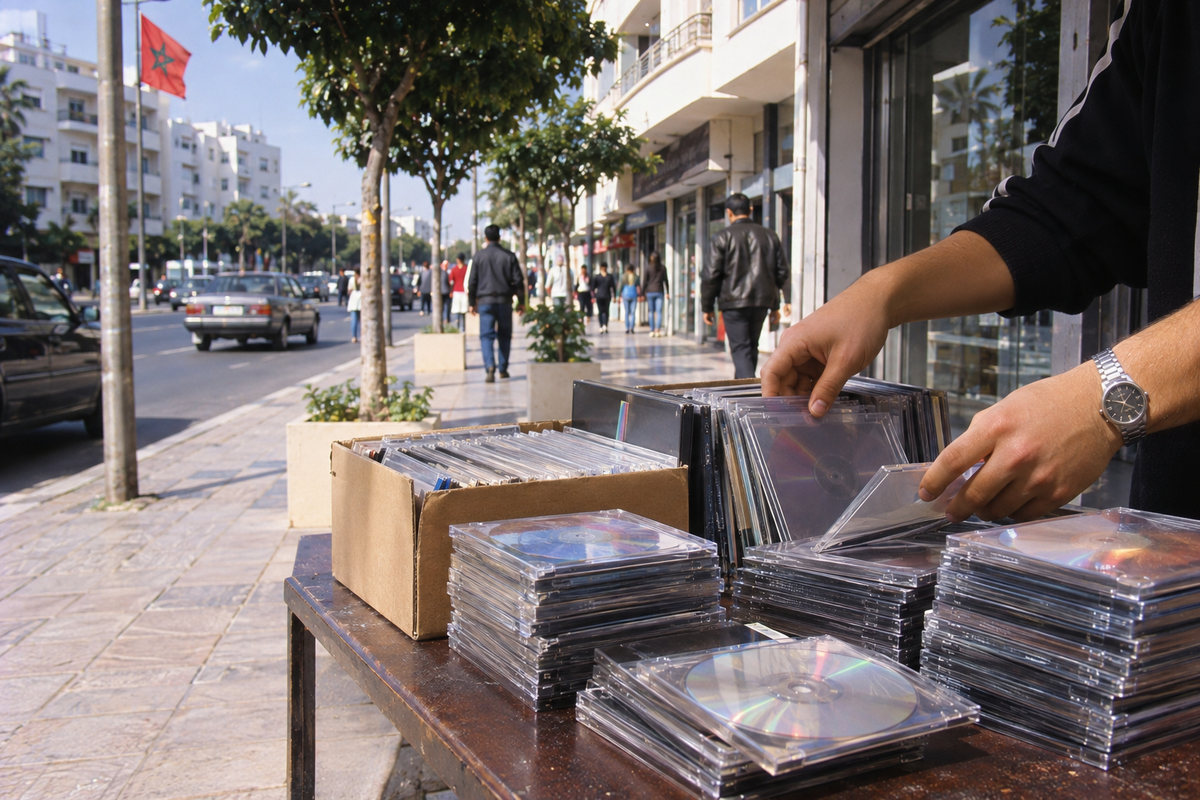
At seven, I moved from the playground to the market. I bought inexpensive music and movie discs and resold them to buyers in Agdal, a busy commercial and residential district in Rabat. I sold them for roughly ten times what I had paid. A student, a shopper and a professional each wanted something different and each valued it differently, so I learned to read who I was talking to and to price accordingly. I also learned the difference between a selling price and a profit, and that the second number was the one that mattered.
The business lesson
Demand sets the price, convenience is part of the product, and profit is the number that matters, not the selling price.

02
Ages 8–10 · 2005–2007
Edmonton: Finding Value Where Others Saw Waste
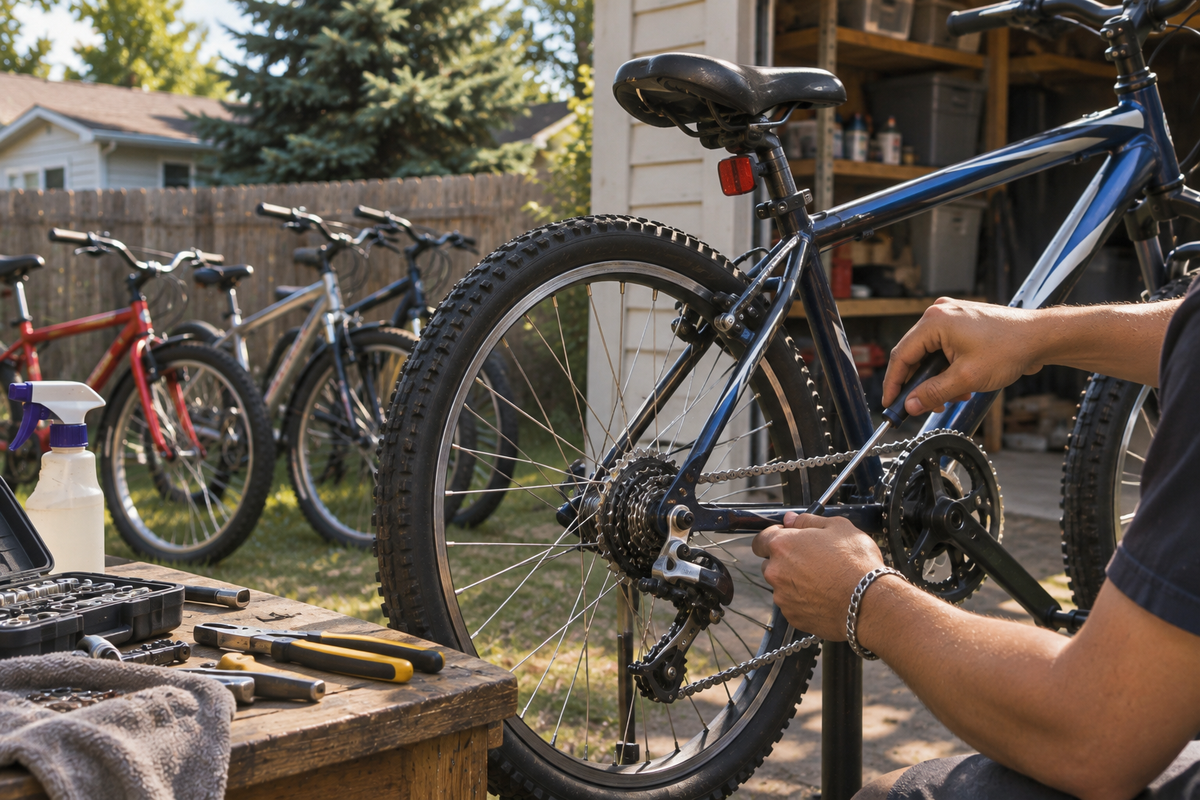
After my family moved to Edmonton, I noticed something that made little sense to me at eight years old. Used bikes in decent condition sold for hundreds of dollars, yet similar bikes were left beside the trash because of a minor mechanical problem. The gap between what those bikes were worth and what people were willing to throw away looked like an opportunity.
I began pulling bikes out of the trash. People left them leaning against the garbage cans around the neighborhood for the garbage truck to collect, and I took them home, repaired and cleaned them and resold them. I also bought bikes from people who no longer wanted them, at wholesale prices. Word spread, and neighbors started supplying my inventory. Buyers came to see the bikes in our clean, finished family basement, which became the place where I met customers and closed sales. Every bike I sold was a lesson in sourcing, repair, presentation and pricing, and every one of these ventures was profitable.
At nine, I did the same kind of thinking with snow. Edmonton winters create reliable demand for a simple service, so I went door to door and shoveled snow for pay. It taught me that you do not always need inventory to run a business. Sometimes you only need to show up, do the work well and ask for the job.
The business lesson
Value is often hiding in what others discard. Sourcing cheaply, presenting well and pricing to the market is a business, whatever the product.

03
Age 11
Soccer and Leadership: Captain of Both Teams
Alongside business, soccer was a big part of my childhood. I played community league soccer and competitive soccer with Edmonton's Warriors Soccer Club, and I was captain of both teams.
Captaincy taught me to hold myself to the standard I asked of my teammates, to take responsibility for how the team showed up and to compete with discipline.
The business lesson
Leadership starts with accountability. A team performs when its captain meets the standard he asks of everyone else.


04
Ages 13–15 · 2010–2012
Learning Video, and Getting Paid for It
As a teenager, I became absorbed in video editing. At 13, someone who wanted to learn video editing for himself agreed to pay me $40 an hour for weekly editing lessons, and he kept paying for a full year. Explaining what I knew week after week forced me to understand it more clearly, and it showed me that a skill I enjoyed could produce real, independent income.
At 14, I produced three paid music videos. I also edited paid content for a political organization associated with Sri Lankan politician Sajith Premadasa, through a campaign worker based in Edmonton. That was paid creative work for an international client, and I mention it as exactly that, not as any political affiliation or endorsement.
In 2011, my mother took out a loan so I could buy video equipment and upgrade my computer, which let me take my business to a higher level. I am deeply grateful for that belief in me.
Every one of those early paying clients found me through online ads. I am grateful to them. They trusted a teenager with real projects, and by doing so they proved to me that a young person with a laptop and a skill could earn income independently.
The business lesson
A skill people will pay for is a business. Teaching it, and finding clients through online advertising, taught me how to turn expertise into income.
Video editing projects from 2012. I edited this footage; I did not film it.

05
Ages 14–18 · 2011–2015
Soccer on YouTube: Learning What an Audience Wants
Alongside client work, I ran my own YouTube channel about soccer. I made cinematic player biographies, highlight reels and trend-driven edits for fans like me. In 2011 and 2012, my first 12 videos drew a combined 133,170 views, and I produced 21 videos in total through 2015. Measured against the YouTube data available from that era, that was roughly ten times the reported median views, which told me early on that I was reaching people. It was still a small independent channel, and I share the numbers for what they are: my first real experience of watching strangers respond to something I made.
Watching which videos people finished, shared and came back for taught me more than any lesson. I learned that a strong opening, a clear subject and a style people recognized mattered as much as technical polish. That was my introduction to audience psychology and content strategy, long before I thought of it as marketing.
I also mentored another creator, who lives in the United States, in video editing. Helping someone in another country showed me that a skill could be shared across borders. He later used those skills for his own storm-chasing page, which was entirely his own project. Teaching him reminded me how much I enjoy helping someone turn a passion into something real.
The business lesson
Audiences reward a strong opening, a clear subject and a recognizable style. That is content strategy and audience engagement in its simplest form.
06
Age 15 · 2012
Harry Ainlay: A Reputation Built on Skill
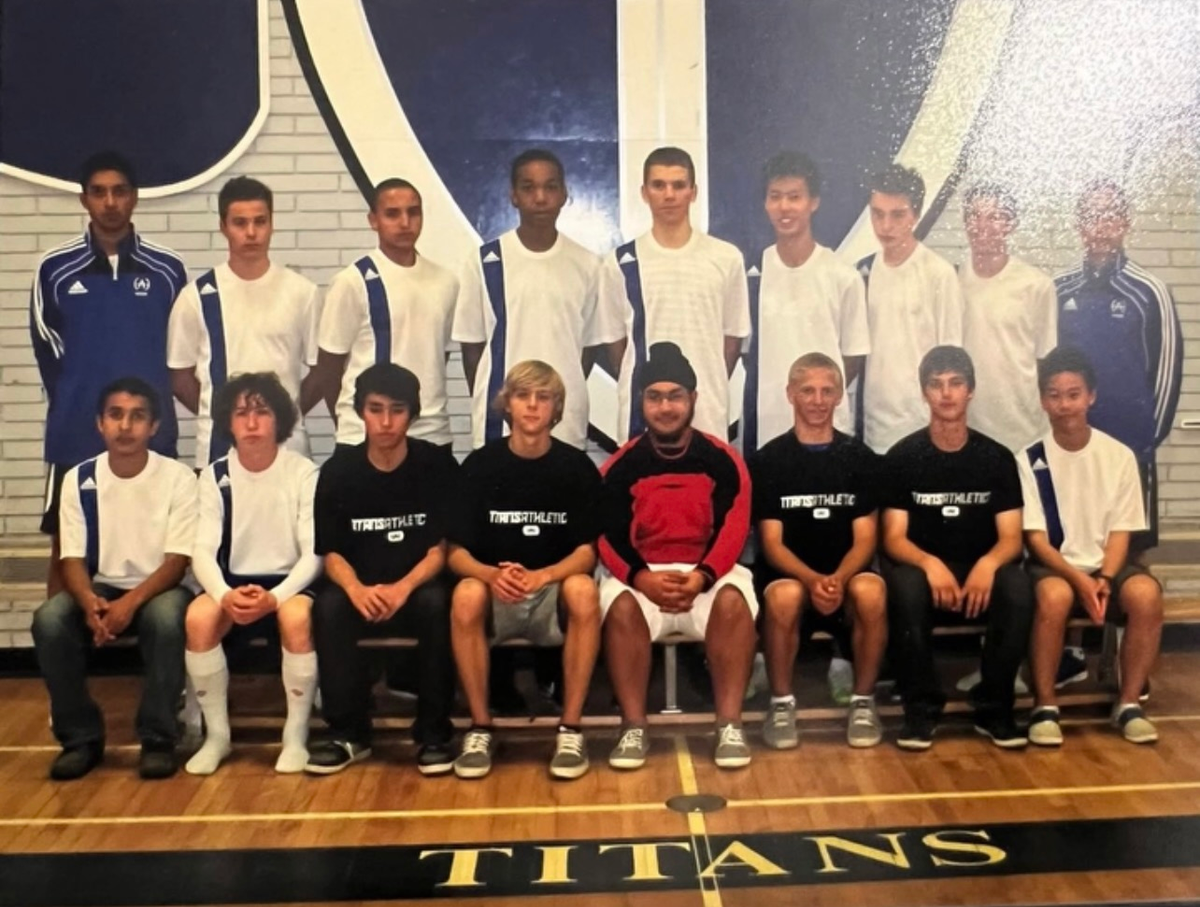
At Harry Ainlay High School, my skills became known in the Communications Technology classroom. Classmates came to me when they were stuck on an edit, and even my teacher sometimes asked for my help. Being the person people sought out for editing mattered to me, because it was a reputation I had earned through the work.
Outside the classroom, I played for the school soccer team, though not as its captain, and wrestled briefly. Those teams, like the editing room, taught me about discipline and showing up consistently.
My reputation led the school to offer me $8,000 to produce its athletic banquet videos. I turned it down, because the shoot days fell during class time and I did not want my grades to slip because of creative work. It still showed me that being known for doing something well can bring opportunities to you, and that I could choose which ones to take.
The business lesson
Reputation generates opportunity, and choosing which opportunities to take is part of good judgment.

07
Ages 16–17 · 2013–2014
From Editing to Commercial Marketing
Online advertisements for my own services had already been bringing me paying clients, and none of them were people I knew. By around 2013 those ads were bringing in projects from businesses. That was the moment my work shifted from editing for individual clients to producing content for commercial purposes.
One of those projects was a commercial video library for Ultra-Medic Laser Skin Studio, with many videos plus other content types created for the business. At the time, video was not yet standard practice for small businesses. The tools were different too: in 2013 there were no mainstream gimbals and none of today's high-spec mirrorless cameras, so video content looked and felt different from what businesses see now. Producing a library of videos for a skin studio meant thinking about what its customers needed to see before they booked, not just what looked good.
Another was product photography for an online retailer of baby bibs. In e-commerce, a customer cannot hold the product, so the photograph has to do that work. The project taught me how presentation shapes confidence and sales, and it widened what I could offer from editing into commercial content and marketing.
The business lesson
Marketing is about what the customer needs to see before they decide. Presentation drives confidence, and confidence drives conversion.

08
Age 17 · 2014
Fitness: Selling, Coaching and an Idea I Couldn't Fund
In 2014, my interest in training led me to a job as a sales representative at Popeye's Supplements. As an employee, I focused on helping customers choose products that actually suited them, which meant reading the research behind the ingredients and explaining it honestly. I learned that customers trust a recommendation more when it comes with a reason.
I also coached one client in fitness online, working with them remotely and turning what I knew into a service for someone else's goals.
Studying supplement research led me to an idea of my own: a science-based formula built around creatine and beta-alanine at effective doses, with real transparency about what was inside. I researched it seriously, but I could not fund it, and it never launched. I still count it, because it taught me how product development, differentiation and financing fit together, and how an idea without capital stays an idea.
The business lesson
Customers trust a recommendation more when it comes with a reason. An idea without capital stays an idea, so product development, differentiation and financing have to be planned together.


09
Ages 18–20 · 2015–2017
West Side Mitsubishi: Certified in Two Days, Known for Profit
Recognition
Fastest certification at the dealership
I completed Mitsubishi's manufacturer certification in two days, a dealership record, for a process that takes most new reps a month or more.
Recognition
Mitsubishi Canada sales presentation award
I won a vehicle sales presentation competition judged by Mitsubishi Canada.
I joined West Side Mitsubishi in 2015 with one goal: to become the top salesperson in the Yachimec Auto Group. I sold new Mitsubishis, including the Lancer Evolution X, along with pre-owned German and Japanese luxury vehicles, performance cars and mainstream vehicles from North America, Europe, Japan and Korea.
Mitsubishi requires every new salesperson to complete manufacturer certification. It takes most new reps a month or more, and the fastest executers finish in weeks. I completed it in two days, a dealership record. It earned me a pay bonus and my first real recognition inside a company. For many months afterward I worked seven days a week, and I treated selling as something to measure. I tracked how many prospects I pitched, how many bought, my closing rate and my monthly prospect volume, so I could see which parts of my process worked and fix the ones that did not.
What I became known for was not volume. It was profit. I was recognized for some of the store's most profitable individual deals because I learned to communicate value clearly, negotiate calmly and protect margin when a customer asked for a discount. I also treated every buyer as the start of a relationship. I put stickers inside fuel doors with my name and phone number, so repeat business, referrals and future owner inquiries came back to me, and I ran online advertising for my own sales.
I bought a 2015 Lancer Evolution X GSR Premium (Evo X) from the dealership for $50,000 CAD, built it with bolt-on upgrades and had it tuned. I took it to car meets and racing events, where it started conversations with exactly the enthusiasts who might buy one, and it made the dealership a known destination for Evo X buyers. It was a commercial tool for meeting prospective customers as much as a personal milestone.
I wanted the experience to start with the very first conversation, so I offered chocolates to people who walked into the dealership and whom I was meeting for the first time, who might or might not buy, and kept a small flowing fountain at my desk. On delivery day, I rolled out a red carpet I had bought online for my clients, brought real excitement to the moment and took a photo of them on it as a souvenir, because taking possession of a vehicle should feel as important as the purchase.
I also did things my sales managers had never seen before. One client wanted to compare our new vehicle with a competitor's, so I offered to drive it to the competing dealership and go with them to compare the two side by side. I did not want to lose that sale. The competing dealership's sales manager was impressed by the move and my commitment to closing, and he offered me a job in his sales department, which I took as a compliment.
None of it happened alone. A sales trainer trained me and taught me the fundamentals of doing the job properly. A sales manager personally mentored me, and his guidance shaped how I handle customers and negotiations to this day. The general sales manager was a pro at tough love and at getting the best out of his sales teams. By example, he showed me a natural way of selling: build rapport, understand the customer and be direct instead of playing games. The general manager supported my growth from the beginning. I am sincerely grateful to my general manager, my general sales manager, my sales manager, my trainer and the colleagues in every department who helped me. Working inside an established dealership also taught me how to bring new ideas into processes that already exist.
The business lesson
Profit beats volume, so I tracked my numbers and protected my margins. Separately, a memorable customer experience is what turns buyers into referrals and repeat business.
During my automotive sales career, I went by the professional name Dean Winfrey. The videos below were made under that name.


10
Around age 20 · Under one year
Service Bay: Discipline and the Engine Flush King
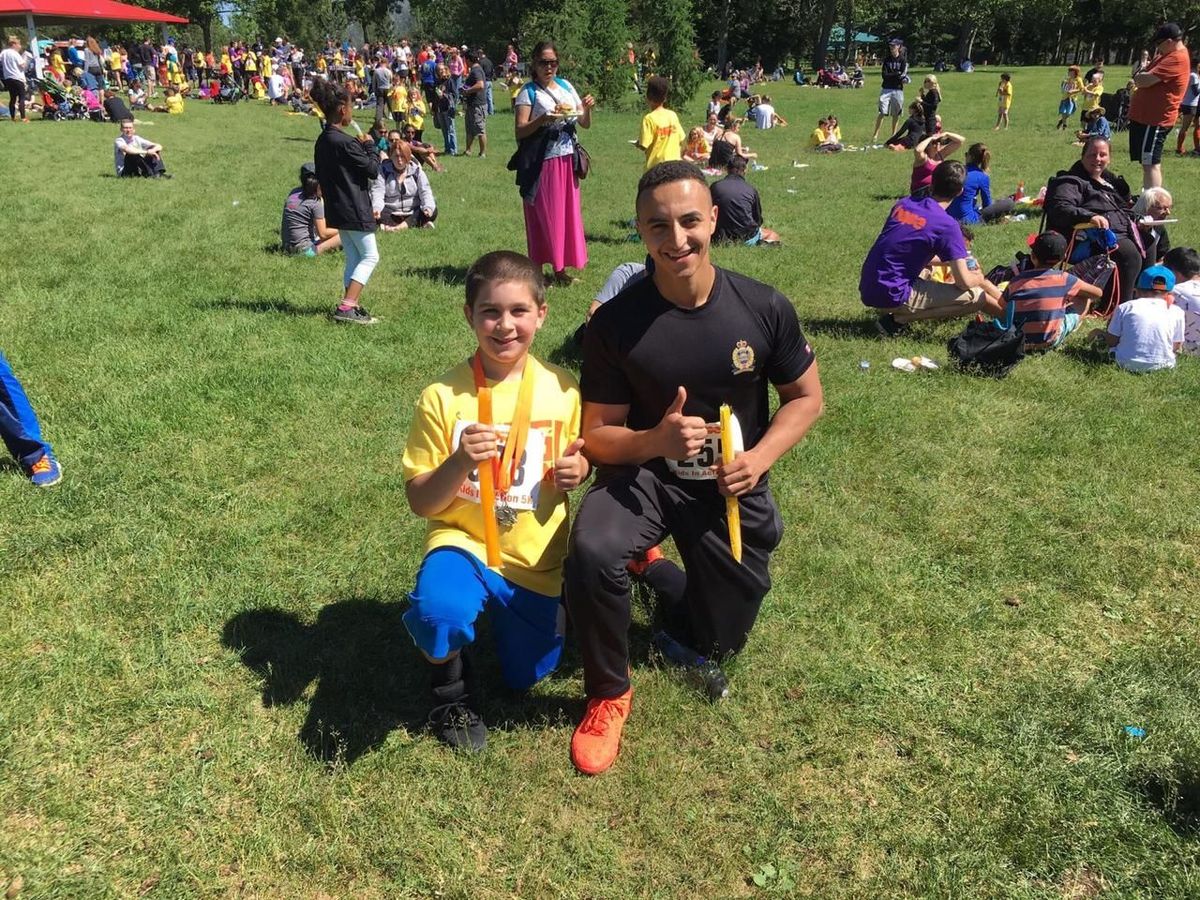
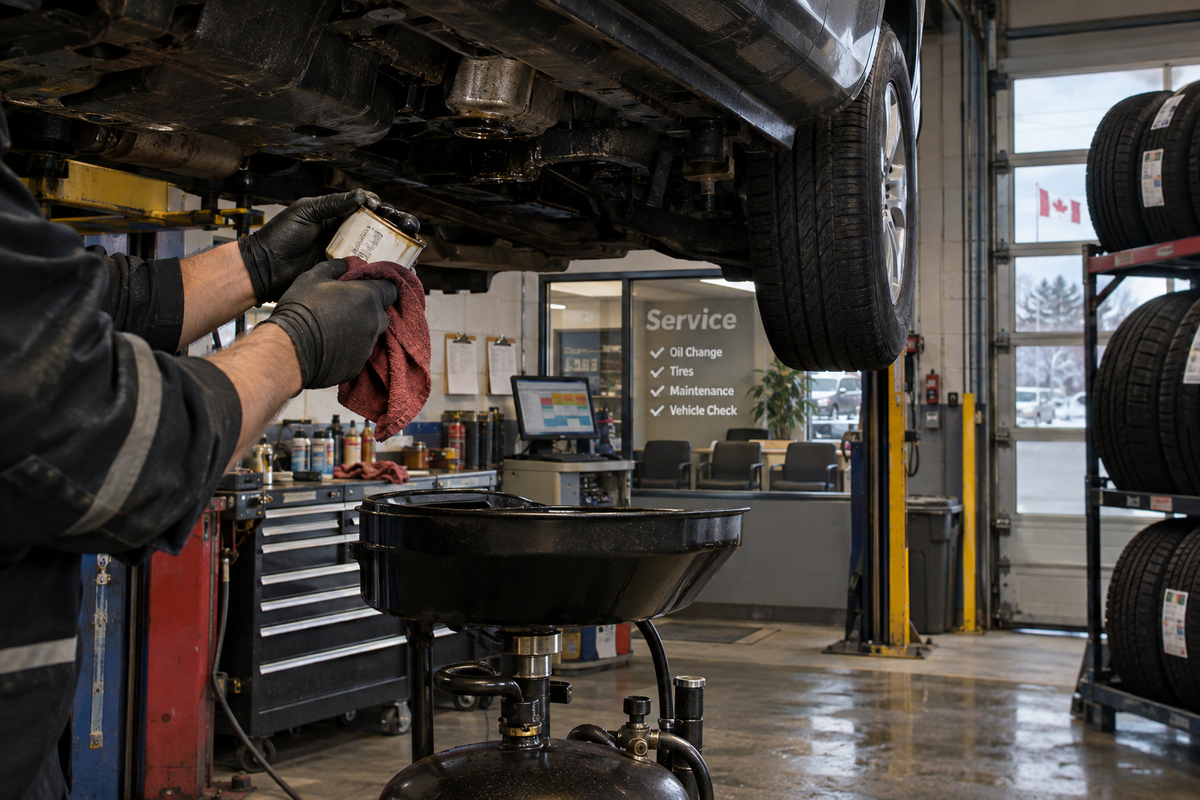
I once planned to serve my community as a police officer and to save enough to open a gym and a marketing agency in Edmonton. To support that goal, I took a job as a lube and tire technician. It left room for the Edmonton Police Service training, volunteering and community work I was pursuing.
The job involved greeting customers, recommending services, entering work orders, coordinating staff, and performing oil changes, transmission and engine flushes, fuel filter and PCV valve replacements, tire services and vehicle assessments. I always tried to recommend what a customer actually needed. I earned additional commission on services and worked out that engine flushes paid the most for the time they took. I sold far more engine flushes than anyone else, and my coworkers and management started calling me the Engine Flush King. I also advised the owner on sales processes, commission incentives and performance-focused sales meetings.
During that period I worked five to six days a week, trained with the EPS RWR program twice weekly, trained in the gym six days a week and volunteered in EPS community initiatives. The RWR program led to me being hand-selected for accelerated development through the Mentorship Academy. In the end I decided not to follow through with policing. Rather than save money in that career, I chose to pursue entrepreneurship by a different path. That period gave me discipline, composure and a commitment to community that I still rely on.
The business lesson
Revenue per labor hour and well-designed incentives shape results. Recommending what customers genuinely need builds the trust sales depend on.
11
Ages 20–21 · 2017–2018
Shopify: Learning What Customers Cost to Acquire
In 2017 I built a Shopify store selling accessories such as bracelets, sunglasses and watches, and I explored customizable shirts and hats using an interactive online design tool.
I paid for the advertising myself. I invested thousands of dollars of my own money in Facebook and Instagram image ads, building custom audiences for individual product categories and styles rather than advertising everything to everyone. I kept studying each platform's technical details and official training. When the money is yours, you learn quickly about customer acquisition costs, how much risk you are carrying and why efficiency matters.
The business lesson
Spending your own money on advertising teaches customer acquisition cost, financial risk and efficiency faster than any course.

12
Ages 21–22 · 2018–2019
Yachimec Again: Building Content That Sells
Recognition
Highest-paid in my role across the dealership group
I became the highest-paid person in my position across a dealership group of more than seven dealerships, one that employed several other digital inventory marketing specialists. I may also have been among the highest-paid in the industry for that role, which reflects my ability to present a business online.
In 2018 I returned to Yachimec Auto Group in a digital role, and over the following year I worked in two different dealerships in the group, under two different general managers. I started by creating videos for the dealership's website and YouTube channel. Under the second general manager, I took the work much further.
My job was to optimize the dealership's digital inventory to increase conversions and traffic, using strategic creative work and copywriting. The dealership's system automatically published my digital inventory listings to third-party sites such as Auto Trader, so the way I presented each vehicle is what set our listings apart. I wrote the vehicle descriptions and produced creative that differentiated our inventory from what competing dealerships were posting.
Every vehicle was presented with each detail thought out: the order of the pictures, the angles, and Photoshop touch-ups for damage that was scheduled to be repaired, so the car could go live and onto the market as quickly as possible. I shot and edited the photos and video myself, using a professional camera and a gimbal.
The work combined everything I had learned. I knew how a customer shops for a vehicle from my time on the sales floor, and I knew how to produce content that presents one well. My creative work and copy supported the dealership's ability to convert online inventory into sales.
The business lesson
Content built for how customers actually shop sells inventory. Combining sales experience with production skill made my work worth more.
Vehicle presentations I made and posted to social media, built on detailed product knowledge and first-hand experience with the vehicles.

13
From my early twenties · Ongoing
Never Done Learning: The Teachers Behind the Strategy
Much of my education came from the people whose ideas I followed online and put into practice. A business-offer strategist shaped how I think about offers, a social media entrepreneur how I think about content, a founder of a global business group about entrepreneurship, a legendary investor about investing, a tech entrepreneur and investor about leverage, a search marketing expert about search, and a creator-business builder about building businesses around creators. None of them mentored me personally. I learned from their content, books and interviews, and tested what I learned on real work.
In my twenties I became Google-certified, and I have extensively studied Google, Meta and HubSpot training materials. I treat learning as part of the job, because the platforms change constantly and the principles underneath them matter more than any single tactic.
The business lesson
The platforms change constantly. Principles, tested on real work, outlast any single tactic.
14
Age 22 · 2019
Leaving Stability to Found ZL Social
In 2019 I left stable employment to start ZL Social. It meant giving up a steady income and taking real financial risk. I could not have done it without my then-wife, who believed in me, supported my decision to leave stable employment and shared the financial risk of starting the business. I am sincerely grateful to her for that.
ZL Social was where all of it came together. Selling Pogs and discs taught me how price and demand work. The bikes taught me to find value others overlook. Video taught me to communicate, and YouTube taught me what holds an audience. Retail taught me to sell by advising, the dealership taught me to convert profitably, and my own ad spend taught me to answer for every dollar. I started with a collection of skills that clients could actually use, and a willingness to put my name and my income behind them.
The business lesson
Owning the outcome means owning the risk. Every earlier lesson became something I could offer a client.
15
Ages 22–30 · 2019–2026
Building ZL Social Through Real Client Results
From its first year, ZL Social grew rapidly. I regularly invested more than 12 hours a day into building the business, developing lasting client relationships and helping companies strengthen their marketing and customer acquisition.
Since 2019, I have personally served more than 50 clients across over 15 industries, managed seven figures in advertising spend and established 13 multi-year client partnerships, including 10 spanning five calendar years or more. At my busiest, I personally managed approximately 17 clients simultaneously.
Working with businesses at different stages of development strengthened my understanding of how companies attract customers, convert demand into revenue, improve profitability and build lasting customer relationships.
These experiences also helped me recognize where I could create the greatest value: working closely with business owners, taking responsibility for their marketing and contributing to strategic decisions that influence the wider business.
The results of my work are documented on the Client Work page, featuring 29 publicly showcased client engagements, case studies and testimonials.
The business lesson
Experience across industries reveals how businesses grow. Understanding the individual business is what allows that experience to create meaningful value.
- 50+
- clients personally served
- 15+
- industries
- 7 figures
- in managed advertising spend
- 13
- multi-year partnerships
- 10
- partnerships spanning five calendar years or more
- 29
- publicly showcased clients
These figures relate exclusively to my independent, personally delivered professional services, not AI agency subscriptions or previous employment.
16
Age 30 · November 2026–Present
From Extensive Experience to an Exclusive Service
After years of building ZL Social, I decided to refine the service around what I find most professionally fulfilling: working closely with business owners and dedicating my expertise to their success.
Rather than expanding my personal client roster, I chose to limit it to five concurrent clients, prioritizing client impact, service excellence and the depth of my involvement.
Today, ZL Social provides personal, premium, white-glove marketing management and business advisory. Through one monthly retainer, each client receives access to my entire marketing skill set, business knowledge, strategic thinking, proactive execution and unlimited marketing requests.
My approach is to identify opportunities, take initiative and dedicate my capabilities to growing each client's business with the same care and commercial awareness I bring to my own.
Separately, between 2024 and 2026, I developed MarketDaily AI by ZL Social, an affiliated AI-powered marketing business that operates independently of my personally delivered marketing management service.
Looking back, the common thread throughout my journey has been recognizing opportunities, understanding what creates value and turning that understanding into action.
From my earliest entrepreneurial ventures to creative production, sales, advertising and business ownership, every chapter has contributed to the professional I am today.
None of this happened entirely on my own. I am sincerely grateful to my mother, my mentors, my colleagues, my clients and my former wife, whose belief and support in 2019 helped me launch ZL Social, and who each supported me at different stages of my professional and personal development.
The business lesson
Growth is not always about serving more clients. Sometimes, it is about creating greater value for the clients you serve.
The Story Continues From Here.
Explore what my experience has helped accomplish for businesses, or speak directly with me about how I can help yours grow.